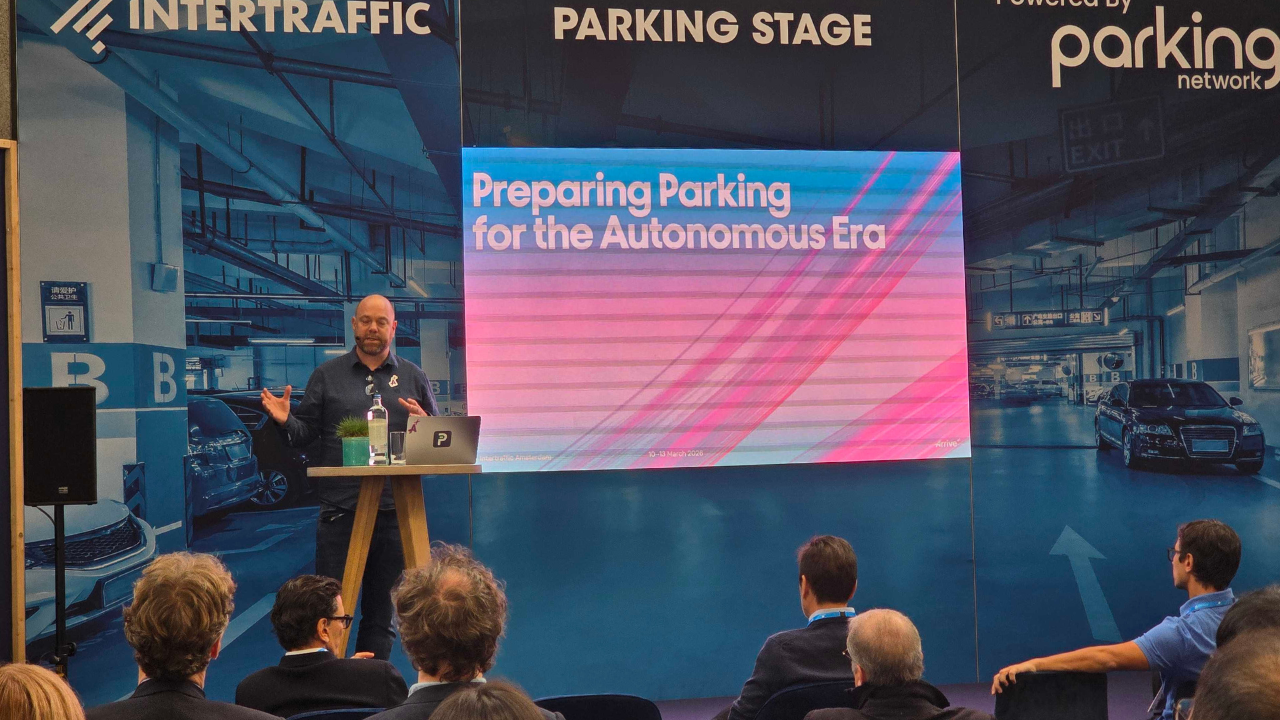
From the moment a trip begins, everything seems to work in harmony. Routes are optimised, traffic is anticipated, and movement feels effortless. But as the destination comes into reach, that harmony fades. The last step of the journey reveals a missing piece that cities can no longer afford to overlook.
Where the journey breaks
Cities are future-proofing their infrastructure, with a heightened interest in connected vehicles, mobility technology, and cleaner transportation because movement shapes how people live. For the most part, this investment is working—with drivers starting to be successfully guided, informed, and in control. But as vehicles enter off-street parking locations, navigation disappears, spaces become invisible, and drivers are left circling in search of a place to park. Operators see valuable inventory go unused, and cities lose visibility over one of the most important parts of the experience: how people actually arrive. For autonomous vehicles, this is more than an inconvenience; it is a critical failure point. A system that can navigate an entire city independently suddenly loses its ability to function the moment it enters a parking structure. This is not a technical limitation, but a systemic gap, and it appears exactly where the journey should come together.
Making the invisible visible
Invisible spaces cannot be managed, and so they remain underutilised. Premium spots sit empty, EV chargers go undiscovered, and reserved inventory underperforms, affecting both revenue and experience, and yet, the opportunity is already there. When spaces become visible, they can be tracked, reserved, and differentiated, meaning parking stops being static infrastructure and starts functioning as a dynamic part of the mobility system—one that creates value for cities, operators, and drivers simultaneously.
A shift in where intelligence lives
For years, improving parking meant adding hardware: sensors, cameras, and smart-building systems. While effective, this approach is expensive and difficult to scale across existing infrastructure.
What has changed is not the physical infrastructure, but the vehicle. Modern cars are already built around software, equipped with sensors, computing power, and advanced navigation. Instead of making buildings smarter, the shift is toward empowering the Software Defined Vehicle, adding a digital layer that allows vehicles and systems to understand what already exists.
With that layer in place, the journey no longer stops at the entrance. Navigation continues inside, guiding drivers through the structure and directly to an available space. Parking destinations become part of the journey rather than the point where it breaks.
From visibility to value
This shift is already delivering results. When indoor mapping and real-time availability are introduced, utilisation increases, movement becomes more efficient, and the same physical space generates more value—without structural change.
- Drivers find spaces faster
- Congestion decreases
- The overall experience improves
Visibility changes behaviour. Once spaces can be seen, they can also be managed, turning previously hidden assets into a fully optimised system:
- Every spot, EV charger, and reserved space becomes visible and manageable
- Inventory can be optimised, priced, and used to its full potential
- Drivers move more confidently, improving the overall flow within the facility
This visibility also shifts how parking is perceived. Instead of a uniform asset, it becomes a set of differentiated options:
- Proximity, convenience, and features can be matched to driver needs
- Remote spaces become viable choices
- Premium and specialised spots gain real, tangible value
What was once a commodity becomes a flexible, dynamic offering.
Completing the journey
Autonomous mobility doesn't end at the curb. Vehicles will still need to drop passengers off, find parking, and return when needed. For that to happen, off-street parking must be understandable to the vehicle, otherwise autonomy simply stops at the entrance. With a digital layer in place, parking becomes a seamless extension of the connected mobility network. The same system that guides a vehicle through the city can guide it to a space or zone, completing the journey without interruption.
The foundations for this are already in place. What has been missing is not infrastructure, but connection, and the ability to integrate parking into the wider system of mobility. Once that connection is made, parking is no longer the weakest link in the journey–it becomes the moment where everything comes together.